Naurangrai Khaitan
The story of Khaitan & Co dates so far back that much of what we know today about the inceptive st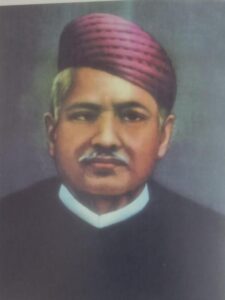 ages of the company is based on titbits of information gleaned from members of the Khaitan clan, the staff of Khaitan & Co and their friends and associates. Amicus Curiae, a 385-page tome authored by Aditi Roy Ghatak which was published to commemorate Khaitan & Co’s centenary in 2011, sheds light on these aspects.
LAW IN THE BLOOD
It is almost as if the law profession runs in the Khaitans’ genes. A peek into the family’s early history, dating back to the early nineteenth century, reveals that Naurangrai Khaitan’s grandfather, Kewal Ram, was a judge in Fatehpura, a town in the Sikar district of Rajasthan. Unable to put up with the oppressive ways of the local thakurs, he left Fatehpura to resettle in Ramgarh (also in Rajasthan), where his son, Puranmull also took up the legal profession. As fate would have it, Puranmull too had to leave home, whereupon, like so many other Marwaris of his time, he turned eastwards, pitching camp in Purulia in Bengal, where he started a small clothes business together with his brothers. His family, however, stayed back in Ramgarh, where, in 1854, his son Naurangrai was born. Puranmull died soon after Naurangrai’s birth.
A BRIGHT SPARK
Around 1866, when Naurangrai was about 12, he left home to join his uncles in Purulia. Here, one day, in an incident that was to change his life, he ran into Colonel E I Dalton, the deputy commissioner of Purulia, who happened to be on a routine survey of his territory on horseback. Intimidated by his awesome presence, the locals as usual scampered for safety, but an unfazed Naurangrai not just faced the burrasahib but also actually held a stimulating conversation with him, which so enthused the Englishman that he went out of his way to meet his uncles to suggest and even insist that they send Naurangrai for higher education. Naurangrai’s uncles complied. Living up to the colonel’s expectations, not only did Naurangrai go on to perform brilliantly in academics, but at a later date, when the Khaitans’ prosperous family business went bust, he once again greatly impressed Colonel Dalton with his work, after the latter stepped in to help him with a job as a sub-jailer at the Purulia jail. Thereon, Naurangrai went on to become the deputy superintendent of jails-the first Indian to be honoured with the post-and was put in charge of the region’s biggest jail which was in Buxar. So able was he at prison administration work that eminent personalities from the country over, including poet Rabindranath Tagore lavished praise upon him. As the years wore on, Naurangrai’s fortunes grew with his improving status that brought him widespread respect and honour and also the zamindari in Purulia that the family had lost when their business ran aground. The year 1906 marked the high point of his career when he was conferred the Rai Bahadur title by the British. With his elevated social status, his outlook towards the sociocultural environment of the times changed also. It had him ensure the best possible education for his children-this was a time when education was looked down upon by the Marwari community-and even go so far as to disregard the taboo attached with English education and send his son Debi Prasad to the Buxar District School, where the medium was English.
THE FOUNDING OF AN INSTITUTION
Naurangrai was married to Surya Devi, the daughter of Gulabrai Jhunjhunwala of Jhunjhunu, through whom he had seven sons and four daughters. Among them were eldest son Lakshmi Narayan, who
was followed by the four daughters and the remaining six sons, who were Debi Prasad, Kali Prasad, Durga Prasad, Gauri Prasad, Chandi Prasad and Bhagwati Prasad. Debi Prasad, the sixth child and the second son, was born on August 14, in 1888. A brilliant student, he went on to earn a first class first in the entrance examination from the Patna division and also a scholarship that led him to the most hallowed educational institution of the day: the Presidency College of Calcutta (now Kolkata). In time, he was to earn a master’s degree, followed by a bachelor’s degree in law, which put him at the pinnacle of academic achievement. Among his co-students at the Presidency College were some of the most brilliant minds of the time, including Rajendra Prasad, who was to later become the first president of the Republic of India; Badridas Goenka, who was to become the chief architect of the RPG business empire and the first Indian chairman of the Imperial Bank of India (now the State Bank of India); and J N Mazumdar, together with whom, he was to lay the foundation of the iconic Khaitan & Co in 1911. Debi Prasad Khaitan’s initiation into the world of law actually had its roots in a promise made by the then Governor-General of Bengal to Naurangrai to secure his (Debi Prasad’s) future by making him a district magistrate. In truth, this was an incentive by the governor-general to retain Naurangrai, who was contemplating going back to Rajasthan after his successful tenure as the administrator of prisons in Buxar. With his career path thus chalked out, Debi Prasad turned his focus towards a future as a district magistrate, but fate took him towards attorneyship instead. This happened on the advice of one Ernest Hardwicke Cowie, an inmate in Naurangrai’s jail whose help Naurangrai had sought to write the application to the Inspector of Prisons, indicating his desire to continue with his employment, provided Debi Prasad was made a magistrate. An erstwhile partner in a firm of solicitors and also a member of the Incorporated Law Society, Cowie felt that with Debi Prasad’s excellent academics, it would best serve him to train to be an attorney.
However, no English law firm would employ Debi Prasad as an articled clerk-a preparatory stage for aspiring attorneys. Ultimately, he joined a firm by the name Manuel and Agarwalla, and a few years on, in 1911, cleared his attorneyship examination with flying colours. The next challenge was to secure partnership in a law firm, which again proved difficult with no British firm accepting him. Choosing to start on his own, he began with a few loyal clients (among them was Ghanshyamdas Birla, whose career as a jute baron was still to take off), until his oratorial and argumentative skills earned the admiration of the Chief Justice and those present at the court one day, while fighting a case as a junior, under the legendary Deshbandhu Chittaranjan Das. After hours of cogent arguments, Debi Prasad won the case, which made him an instant hit. Work started pouring in for the Young Turk after this, until emboldened. he teamed up with his college mate J N Mazumdar and set up their own firm at 10, Old Post Office Street, in Calcutta. Khaitan & Co was born. The law profession was held in high esteem in Bengal in those days, and it was a matter of immense pride for Marwaris that one of their own had become an attorney long last.
” LIKE MOST OTHER FIRMS, KHAITAN & CO TOO WAS A PARTNERSHIP FIRM, WHERE WORK WAS SHARED BETWEEN PARTNERS, ARTICLED CLERKS AND LAWYERS. IT HAD DEDICATED TEAMS TO HANDLE VARIOUS CLASSES OF LITIGATIONS “
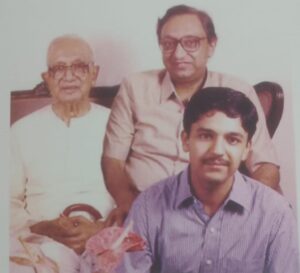
As of today. Khaitan & Co is a full-service law firm and the senior most partner is Bhagwati Prasad’s son Pradip Kumar Khaitan (Pinto to his friends), who over the last four-and-a-half decades has acquired a formidable reputation like his father. The firm boasts 115 partners and directors and over 500 fee earners (including partners and directors) across its four offices. It exercises a global influence, thanks to its good working relationships with international firms, and is capable of advising any client in India or elsewhere in the world, in any matter. Among its areas of practice include mergers, joint ventures, acquisitions and sales of controlling interest, minority sales, investment, pre-IPO placements, public takeover offers, hostile takeovers, management buy-outs, business transfers and asset sales in both domestic and cross-border transactions. And with that, the century-old legend called Khaitan & Co not just lives on but continues to conquer new grounds as it marches towards a double century.